New York restaurants operate in one of the most expensive labor markets in the country. New York State’s minimum wage is currently $16.50 per hour, while tipped employees earn a minimum cash wage of $11 per hour, allowing operators to apply a $5.50 tip credit toward the standard minimum wage. Tip pooling arrangements must be carefully structured and clearly communicated to remain compliant, particularly when including sommeliers, runners, or other support staff.
Salaried employees are exempt from overtime only if they satisfy both the salary threshold and the applicable duties test. Failing either requirement means overtime rules still apply. Add alcohol service liability, allergen disclosure laws, and evolving workplace regulations, and ongoing staff training becomes more than good management — it becomes a legal and operational necessity.
At the same time, rising wage pressure has made labor management one of the defining factors in restaurant profitability. In an industry where net margins often sit between 3% and 6%, even minor inefficiencies in scheduling or staffing can erase profits entirely. With the average U.S. restaurant lifespan estimated at just 4.5 years — and nearly one in five restaurants closing within the first year — controlling labor costs is no longer optional. It is essential to survival.
The Real Cost of Payroll
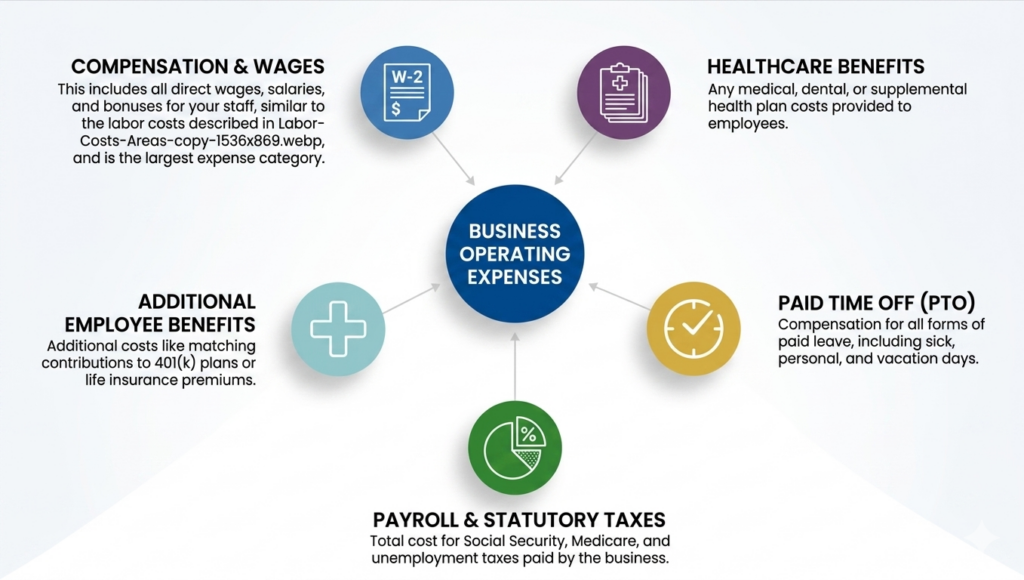
Labor is typically the single largest controllable expense in a restaurant. Payroll extends far beyond hourly wages and includes:
- Salaries and management compensation
- Overtime pay
- Payroll taxes
- Workers’ compensation insurance
- Employee benefits and healthcare
- Training expenses
- Uniforms and onboarding costs
Because labor accumulates through so many channels, even a small 1–2% decline in labor efficiency can significantly impact profitability.
Unlike customer traffic, which can fluctuate unpredictably, labor scheduling is something operators can actively manage. The objective is to find the operational “sweet spot” — lean enough to protect margins while maintaining service standards and guest satisfaction.
Understanding Labor Cost Percentage
Labor cost percentage measures how much of every sales dollar is spent on staffing.
The formula is straightforward:
Labor Cost Percentage=(Total Labor / Cost Total Sales) ×100
This metric is one of the two major components of Prime Cost, which combines:
- Total Cost of Goods Sold (COGS)
- Total Labor Cost
Prime cost represents the largest and most controllable portion of restaurant operating expenses. Unlike fixed expenses, such as rent, labor, and food costs, can be actively optimized through scheduling, purchasing, menu engineering, and operational efficiency.
Why Labor Percentage Matters
Every dollar a restaurant earns must first cover labor, food, occupancy costs, utilities, insurance, and operating expenses before profit exists. When payroll consumes too much revenue, margins disappear quickly.
A shift of just five percentage points in labor cost can equal $50,000 annually on a restaurant generating $1 million in sales. That difference can determine whether an operator can reinvest in equipment, absorb food inflation, or simply stay afloat.
Today’s restaurant operators face mounting pressure from three major forces:
- Rising minimum wages and competitive hiring markets
- Food and supply chain volatility
- Third-party delivery commissions and platform fees
Because these pressures compound, labor management must become increasingly data-driven.
Labor’s Role in Prime Cost
Prime Cost is widely considered the most important operational metric in hospitality because it captures the majority of controllable expenses.
Prime Cost = COGS+Total Labor Cost
Every percentage point reduced through smarter scheduling, reduced overtime, improved prep efficiency, or lower turnover flows directly to the bottom line.
However, “ideal” labor percentages vary significantly depending on the business model and market:
- Quick-service restaurants (QSRs) often operate in the high-20% range
- Fast casual concepts typically fall between 28–33%
- Full-service restaurants commonly operate between 35–40%
- Fine dining establishments generally range from 30–35%
- Bars and pubs may run as lean as 18–24%
These figures are reference points, not universal targets. Geography, local wage laws, tipping culture, and service style all influence labor structure.
How to Calculate Restaurant Labor Cost Percentage
Step 1: Gather Complete Payroll Data
Many operators underestimate labor costs because they only track hourly wages. A proper calculation should include every labor-related expense:
- Hourly wages
- Salaries
- Bonuses
- Overtime
- Payroll taxes
- Insurance costs
- Benefits
- Training expenses
- Uniforms
Step 2: Apply the Formula
Total Labor Expenses÷Total Revenue=Labor Cost Percentage
Example:
If weekly payroll totals $10,000 and weekly sales equal $30,000:
(30,000 / 10,000) ×100 = 33.3%
In this scenario, labor consumes 33.3% of total revenue.
Step 3: Monitor Frequently
Monthly profit-and-loss statements are useful historically, but they often reveal problems after the damage is already done. Weekly — and in many cases daily — labor tracking allows operators to identify “labor drift” before it impacts an entire quarter.
Alternative Lenses for Labor Analysis
Beyond the standard percentage, viewing your labor through these specific lenses can reveal hidden operational inefficiencies:
| Metric | Why It Matters | Strategic Insight |
|---|---|---|
| Payroll ÷ Operating Expenses | Benchmarks labor against fixed costs like rent. | If labor is already 40% of total expenses, a rent hike could be catastrophic. |
| Payroll ÷ Prime Cost | Balances people costs against product costs. | If labor is half of your prime cost, your menu might be too “prep-heavy.” |
| Labor Dollars per $100 Sales | Makes data tangible for floor managers. | If the rate is 30%, every $100 in sales equals $30 in labor. |
The Importance of the Daily Flash Report
Waiting until the month-end to evaluate payroll performance is reactive management. Successful operators rely on daily flash reports to monitor labor performance in real time.
A flash report is a simplified operational snapshot focused on the restaurant’s most important daily metrics, including:
- Net sales
- Labor percentage
- Scheduled versus actual labor
- Discounts and comps
- Budget variances
Unlike a full financial statement, a flash report prioritizes speed and operational visibility. It gives managers the ability to adjust staffing levels immediately rather than weeks later.
Modern workforce management and restaurant accounting platforms can automate much of this process by integrating:
- POS systems
- Scheduling software
- Payroll systems
- Inventory platforms
This allows operators to identify labor inefficiencies before they materially impact profitability.
The 30-30-30-10 Rule
Many operators reference the traditional “30-30-30-10” restaurant model:
- 30% food cost
- 30% labor cost
- 30% overhead
- 10% profit
While the framework remains a useful concept, modern restaurant economics rarely fit neatly into these percentages. Wage inflation, rent increases, delivery fees, and varying service models make rigid benchmarks less practical than they once were.
Today, operators are generally better served by focusing on weekly prime cost performance and labor variance rather than relying on static industry formulas.
Proven Strategies to Control Labor Costs
Forecast Labor Around Demand
Effective scheduling starts with sales forecasting, not repeating last week’s schedule. Historical sales patterns, reservations, weather, holidays, and events should all influence staffing decisions.
Predictive scheduling tools help align labor deployment with expected demand while reducing unnecessary overtime and overstaffing.
Cross-Train Employees
Cross-training creates operational flexibility without increasing headcount. Employees capable of covering multiple positions allow managers to adapt staffing levels dynamically during both peak and slow periods.
Examples include:
- Bartenders assisting with food running
- Servers covering hosting responsibilities
- Kitchen staff rotating prep responsibilities
Cross-training often improves both labor efficiency and guest service consistency.
Invest in Staff Development
Training reduces costly mistakes, improves productivity, and lowers employee turnover. In a high-turnover industry, retention itself becomes a major cost-saving strategy. Even modest investments in structured onboarding and ongoing coaching can improve labor performance significantly over time.
Optimize Kitchen Efficiency
Operational inefficiencies in the kitchen often create hidden labor costs. Standardizing recipes, simplifying prep procedures, and evaluating menu items based on labor intensity can improve both speed and profitability.
Restaurants should regularly evaluate:
- Prep-heavy menu items
- Low-margin dishes
- Waste-generating processes
- Equipment bottlenecks
Labor-intensive menu items with weak margins may need to be redesigned or removed altogether.
Use Technology to Identify Cost Drift
Modern restaurant technology platforms help operators identify labor issues early through:
- Automated scheduling
- Real-time labor tracking
- Payroll integration
- Forecasting tools
- POS analytics
By integrating payroll, scheduling, inventory, and sales systems, operators gain far greater visibility into labor efficiency and operational performance.
Increasing Revenue Per Labor Hour
Controlling labor costs is not solely about cutting expenses — it is also about improving productivity and sales efficiency.
Operators can improve revenue generated per labor hour through:
- Menu engineering
- Upselling high-margin items
- Streamlining menu complexity
- Expanding revenue channels
- Improving table turns
- Increasing operational throughput
Industry surveys consistently show that restaurants improving sales productivity often outperform those focused exclusively on cost reduction.
The Bottom Line
Workforce management remains one of the most difficult — and most important — aspects of operating a restaurant. Labor costs are dynamic, complex, and heavily influenced by market conditions, wage laws, and operational discipline.
The challenge is that improvements rarely happen overnight. Labor optimization requires consistent monitoring, accurate forecasting, and operational accountability. But the payoff can be substantial.
For many restaurants, improving labor efficiency by just a few percentage points can have the same bottom-line impact as dramatically reducing food costs or increasing revenue.
In today’s restaurant environment, operators who actively manage labor with precision, data, and discipline place themselves in a far stronger position to protect margins, improve stability, and build long-term sustainability.
If you are a New York City restaurant operator or manager looking to improve profitability, feel free to contact Bookkeeping Chef for a free consultation.